No matter how much we follow product launches and scroll through social media, some beauty trends of the year really change the way we build our routine. Between textures that merge skincare and makeup, shades designed to last beyond a season, and a personalization that goes beyond just choosing a color, the benchmarks are shifting. Here are the concrete points to remember to adjust your look without falling into accumulation.
Hybrid skincare-makeup products: the real beauty trend to watch
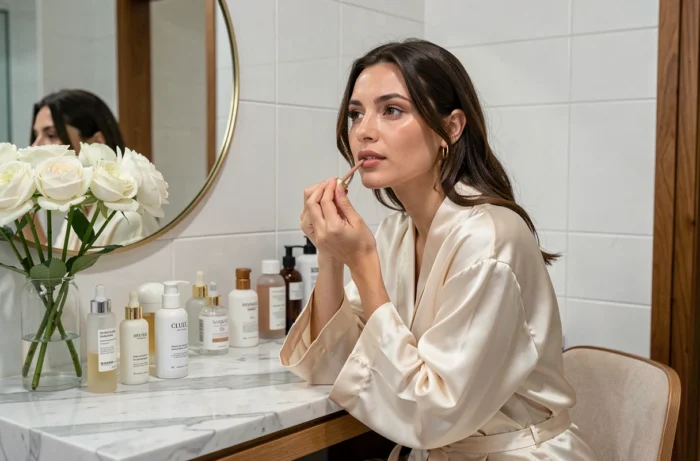
When looking for foundation, we increasingly come across formulas that claim a skin benefit alongside coverage. This is not a hollow marketing argument: the boundary between skincare and makeup is truly blurring. The BB creams of a decade ago paved the way, but current formulations incorporate moisturizing or soothing active ingredients at effective concentrations.
In practical terms, we can reduce the number of products applied in the morning. A tinted serum with sun protection replaces three steps. For those who monitor their skin’s reactivity, this is a net gain: fewer layers, less risk of sensitivity. You can also find on the beauty section of Beauty Boo references that illustrate this convergence between aesthetic correction and active care.
The trap is believing that any product labeled “hybrid” replaces a true targeted treatment. If you have a specific issue (acne, marked dehydration), the hybrid product complements; it does not substitute for an appropriate treatment.
Personalization of the beauty routine: beyond online diagnosis
Personalization is everywhere. But between a five-question quiz on an e-commerce site and a real diagnosis, the gap remains wide. What is changing right now is the arrival of artificial intelligence in shade and formula selection. L’Oréal, for example, has invested in tools capable of analyzing the skin in real-time to provide a tailored recommendation.
For us, users, this translates into mobile apps or in-store kiosks that scan skin texture, sebum levels, or pigmentation. Feedback varies on this point: some recommendations are impressively accurate, while others remain too generic. The best approach is to cross-reference the digital diagnosis with the advice of a trained consultant.
How personalization changes shopping habits
We buy fewer “universal best-seller” products and more targeted references. This shift has a positive effect on the budget in the medium term. Fewer bottles abandoned at the back of the bathroom, fewer disappointments.
- Analyze your skin at different times of the year: needs change between spring and autumn, and a fixed routine loses effectiveness over the seasons.
- Test a product for at least three weeks before judging its real effect on your skin, especially for anti-blemish treatments.
- Prefer brands that offer an exchange or refund if the shade or formula does not suit after testing.
Lip and eye makeup: shades that last this season
On the color front, powder pink, taupe, and bronze shades dominate the collections. For lips, the trend is a blurred finish, almost melted into the skin. A nude lip liner is applied slightly beyond the contour, then blended with a tinted balm. The result adds volume without heaviness.
For the eyes, the smoky look evolves into something softer. Intense black is replaced by warm brown or taupe, and blending is emphasized over a sharp line. A discreet eyeliner line along the lash line is enough to structure the gaze without rigidity.
Choosing textures suited to your complexion
Shiny and pearlescent textures are making a comeback, but in touches. A hint of gloss at the center of the lower lip, a champagne eyeshadow on the brow bone. Applying shine in small areas captures light without an “oily face” effect.
If you have fair skin, rosy and champagne tones work immediately. On darker complexions, bronze and copper add a depth that pink alone does not provide. Lip makeup also benefits from matching the blush: a rosy blush paired with a rosewood lipstick creates coherence across the entire face.
Hair and hairstyle: maintaining a look without multiplying products
The logic of “less but better” also applies to hairstyling. Reducing your hair routine to three well-chosen products often yields better results than an accumulation of masks, serums, and sprays. A shampoo suited to the hair type, a lightweight conditioner, and a leave-in treatment to protect against thermal damage cover most needs.
Structured cuts, particularly the lob (long bob) with a slight asymmetry, remain highly sought after in salons. They allow for volume retention without lengthy styling each morning. For curly or coily hair, there is a renewed focus on treatments that respect the natural curl rather than repeated straightening techniques.
Fragrance: building a signature rather than following a best-seller
Fragrance is also becoming personalized. The layering technique, which involves layering two fragrances, is gaining traction. A woody or musky base is applied, followed by a floral or citrus note depending on the mood. The result: a fragrance that no one else wears exactly the same way.
- Apply the first fragrance to pulse points (wrists, neck), let it dry, then spray the second on top.
- Choose two perfumes from the same olfactory family for a coherent match, or two opposing families (woody and floral) for a bold contrast.
- Store your bottles away from light and heat: poorly stored perfume loses its top notes in a few months.
The beauty trends of the year all point in the same direction: adapting products to your skin and lifestyle rather than replicating a standardized look. The real novelty is that the tools to achieve this, from AI diagnosis to hybrid formulas, are now accessible in daily life. The key is to sort out what works for you and leave the rest on the shelf.