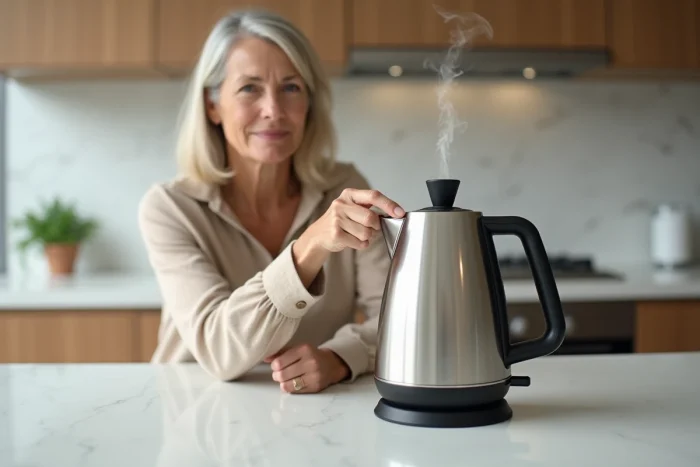
The power of an electric kettle directly determines how quickly the water reaches the desired temperature. In the French market, models range from modest wattages to devices exceeding two kilowatts, without the maximum power always being the most suitable answer for actual domestic use.
Power and thermal losses: what manufacturers are starting to reconsider
The race for watts has long dominated the market. More power meant less waiting, and that argument was enough to sell.
Since 2023-2024, progressive ecodesign requirements have pushed several manufacturers to rethink this trade-off. The goal is shifting towards a better balance between heating speed and thermal losses, rather than the systematic pursuit of maximum power. Consumer guides have not yet integrated this shift: boiling speed remains presented as the central criterion.
A very powerful heating element speeds up the temperature rise, but it also dissipates more heat into the air during the cycle. For a small volume (one or two cups), the difference with a less powerful model is measured in seconds.
For one and a half liters, the difference becomes clearly noticeable. It is in this specific case that high power is fully justified. For those who want to learn more about Domotica, the technical parameters are detailed according to these usage scenarios.
Electric kettle: individual use scenario versus collective use
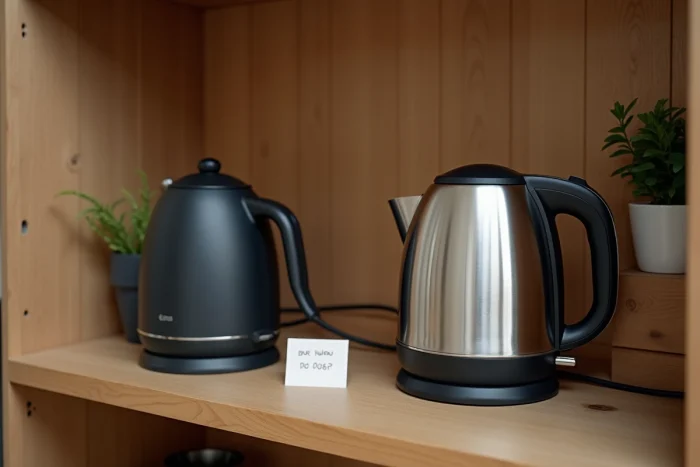
An isolated power figure does not answer anything. The frequency of use and the volume heated in each cycle completely change the equation.
In a household of one or two people, the kettle is used for small volumes, two to three cups a day. A moderate power is sufficient and limits consumption. The target temperature is reached quickly without mobilizing a disproportionately powerful heating element relative to the need.
For collective use (large family, shared office), the situation reverses. Heating a full carafe several times a day with a low-powered model multiplies the cycles and lengthens each one. Several technical analyses indicate that high power can then prove to be more energy-efficient, by reducing the number of temperature rises and the cumulative losses that accompany them.
Setting a universal threshold remains difficult. The right setting depends on the average volume heated, the number of daily cycles, and the insulation capacity of the carafe.
Adjustable temperature and power: two related but rarely crossed parameters
Adjustable temperature kettles have become widespread. They offer heating levels: around 40 °C for a baby bottle, 70-80 °C for loose green tea, 90 °C for black tea or filter coffee. This function changes the way power comes into play.
Heating water to 70 °C instead of 100 °C mechanically reduces the energy consumed. Not exceeding the useful temperature threshold represents a direct saving, regardless of the wattage of the device. Recent technical sheets are starting to incorporate this aspect, while traditional buying guides still treat variable temperature as mere comfort, without linking it to the actual energy impact.
Three criteria allow for evaluating the relevance of a variable temperature model:
- The accuracy of the temperature levels, which varies by manufacturer and directly influences the quality of infusion for delicate teas
- The stability of keeping warm, which determines whether the heating element frequently restarts or not, affecting cumulative consumption
- The power of the heating element combined with the volume of the carafe: a powerful model with a large reservoir will reach an intermediate level very quickly, while a less powerful model with a small reservoir will do the same with less power consumed
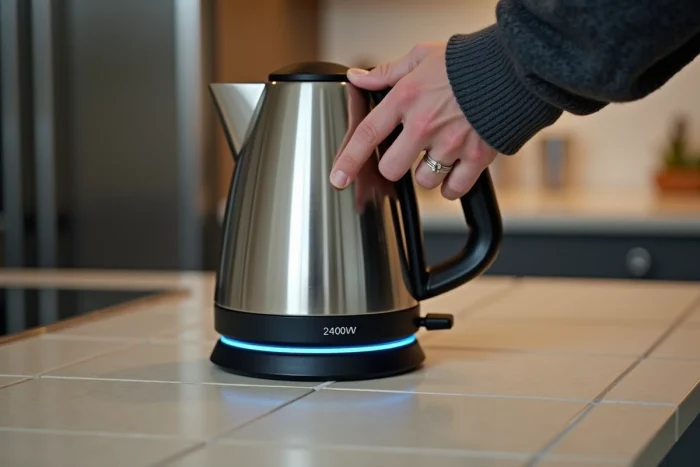
Actual consumption of a kettle: often ignored variables
Compared to other household appliances, the consumption of a kettle remains a modest item. For regular use of two daily cycles of a few minutes, the annual bill represents only a marginal fraction of the electricity budget.
Limescale is an aggravating factor that is rarely taken into account. This layer of calcite, which deposits in hard water, degrades the thermal transfer between the heating element and the water. The cycle lengthens, consumption increases for the same result. Regular descaling with white vinegar has a greater effect on actual efficiency than the choice between two power levels displayed on the technical sheet.
Other variables come into play:
- The material of the carafe: stainless steel and glass do not offer the same insulation properties as plastic, which affects heat loss during the cycle
- The volume actually heated compared to the maximum capacity, as filling the kettle beyond the need results in wasting energy with each use
Choosing the power of a kettle according to its electrical installation
One technical aspect escapes most guides: compatibility with the electrical circuit of the home. A high-powered kettle draws significant current from a standard outlet. In an old home with an undersized panel, plugging in a powerful kettle and a toaster simultaneously can be enough to trip the circuit.
Checking the amperage of the kitchen circuit before purchasing a high-end model avoids this type of inconvenience. Standard French outlets generally support the load, but cheap power strips and extensions can pose problems with devices that draw a lot of current.
The volume heated daily, limescale maintenance, and circuit compatibility weigh as much as the number of watts displayed on the packaging. Sometimes even more.