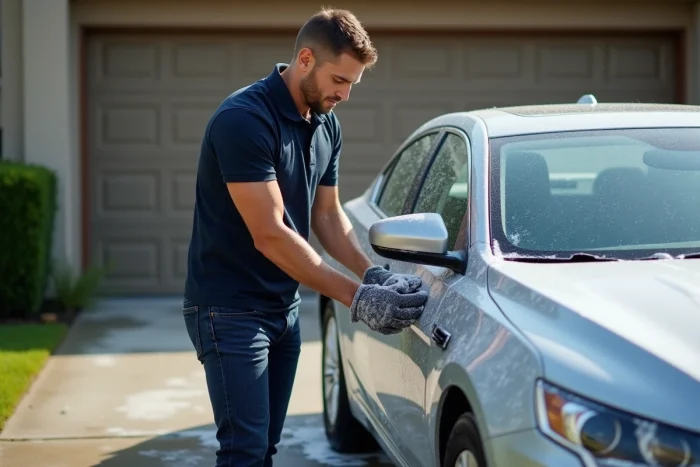
The maintenance of a car is not limited to periodic check-ups at the garage. Between visits to the workshop, it is the regular actions of the owner that determine the longevity of the bodywork, the reliability of the sensors, and the overall condition of the interior. This topic has evolved in recent years with the introduction of new regulatory constraints on products, the proliferation of driver assistance systems, and the rise of electric vehicles.
High-pressure washing and ADAS sensors: an underestimated risk area
Recent cars are equipped with radars, lidars, and cameras that assist with emergency braking, lane keeping, and adaptive cruise control. These sensors are exposed on the bodywork, often behind the grille, in the mirrors, or at the top of the windshield.
Several manufacturers (Volkswagen, Renault, Toyota) have published technical notes since 2022 stating that repeated high-pressure washes in these areas can cause temporary malfunctions: deactivation of ADAS, false alerts, necessary recalibration. Their updated maintenance manuals now recommend “no-spray” zones around the sensors.
In practice, this means that concentrated jet cleaning within thirty centimeters of a front radar or rear camera is not advised. To easily locate them, there are dedicated resources for car maintenance like https://labelleauto.fr/ that help better identify the sensitive points of each model. A damp microfiber cloth remains the safest method for cleaning a sensor’s surface without risking forcing water into the sealing joints.
Homemade cleaning products and CLP regulation: what has changed
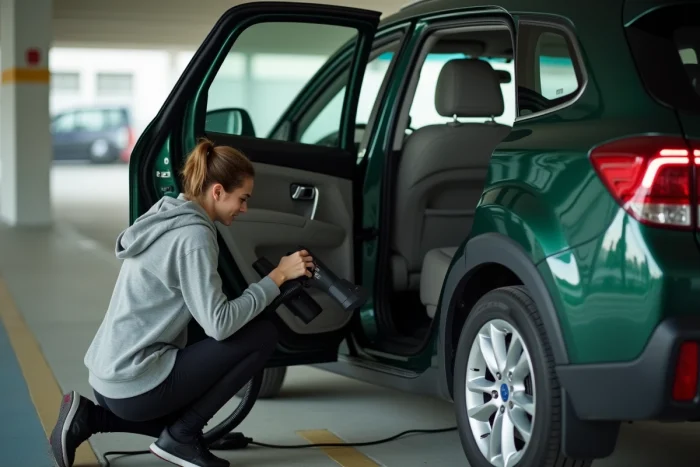
“Grandma’s tips” for washing a car are widely circulated online: white vinegar on the bodywork, dish soap as car shampoo, washing soda for degreasing wheels. Their apparent effectiveness masks documented risks.
The revised European CLP regulation (2023-2024 adaptation) more strictly regulates several substances commonly repurposed for car cleaning. Washing soda, certain solvents, and powerful degreasers are increasingly flagged for their skin and environmental risks. This regulatory evolution has led manufacturers and auto centers to explicitly discourage homemade mixtures for the bodywork and interior.
White vinegar attacks varnishes and ceramic protections. Dish soap, formulated to cut food grease, also removes protective waxes applied to the paint. Toothpaste on headlights works as a coarse abrasive but leaves micro-scratches that accelerate yellowing over the months.
What dedicated products actually provide
Neutral pH car shampoos are formulated to dissolve dirt without altering the varnish or rubber seals. An automotive polishing product contains micron-calibrated abrasives, whereas toothpaste has a random grain size. The cost difference per wash remains marginal, often just a few cents.
- Dedicated wheel cleaners dissolve brake dust (iron oxide) without attacking the coating, which household degreasers do not do
- Ceramic protections or synthetic waxes create a hydrophobic barrier that reduces the adhesion of pollutants between washes
- Interior plastic cleaners contain UV filters that slow down the aging of the dashboard, unlike food oil sometimes recommended
Specific maintenance for electric vehicles: products and points of vigilance
The aesthetic maintenance of an electric vehicle is not limited to that of a thermal car without an exhaust system. Brake dust differs on vehicles with high regeneration, as mechanical braking is less utilized. The discs and pads wear differently, and the composition of the residues deposited on the wheels changes.
Manufacturers like Meguiar’s, Sonax, and Turtle Wax have launched ranges targeting electric vehicles since 2023. These products respond to workshop feedback on corrosion and premature oxidation of charge covers and trap seals. The charging area, exposed to the elements and frequent handling, requires regular cleaning with non-conductive products and protection against moisture.
Protecting seals and specific surfaces
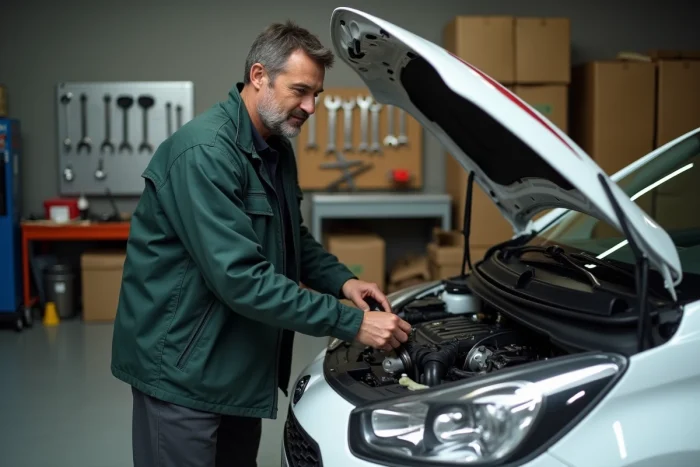
The charging port seals are subject to repeated mechanical stress (daily opening/closing) and exposure to road splashes. An appropriate silicone treatment preserves their flexibility and watertightness.
Black exterior plastics, prevalent on electric models for styling and weight reasons, quickly gray under UV exposure. An exterior plastic renovator applied every two to three months maintains their original appearance and limits degradation.
Polishing techniques and paint correction: distinguishing levels of intervention
Automotive detailing covers a wide spectrum, from simple polishing to multi-step paint correction. Superficial scratches (which cannot be felt with the nail) generally disappear with an appropriate polish and a finishing foam pad. Deep scratches, which have penetrated the varnish down to the base coat, require paint touch-up before any polishing.
- Hand polishing is suitable for regular maintenance: it revives shine without removing material from the varnish
- Machine polishing (orbital polisher) corrects micro-scratches and automatic wash marks but removes a fine layer of varnish with each pass
- Multi-step correction (compound then fine polish) is reserved for marked defects and should not be repeated more than a few times over the vehicle’s lifespan
An automotive varnish measures a few dozen microns in thickness. Each polishing removes a fraction. Excessive use of the polisher, even with a mild compound, eventually weakens the paint protection. A varnish thickness check using a gauge allows you to know how much correction margin remains before compromising the base coat.
The routine maintenance of a car benefits from being thought of as a combination of simple actions and choices of products suitable for the vehicle, rather than as an accumulation of generic tips. Recent developments, whether related to regulatory constraints on products or the specificities of electric vehicles and ADAS, make this approach more technical than it was a few years ago.