A cast-iron radiator running at full blast in a 20 m² living room can drive humidity well below the comfort zone. You may wake up with a dry throat, find your parquet flooring shifting, and have chapped lips as early as November.
Two solutions come up time and again in searches: a water-filled radiator humidifier that hangs on the radiator, and a ceramic humidifier. The choice between them depends less on your budget than on the area you need to cover and how much control you want.
Ceramic radiator humidifier: what to realistically expect
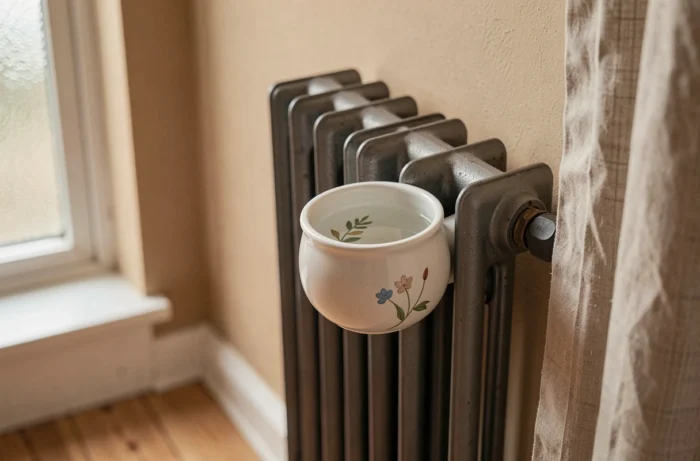
A radiator humidifier is a ceramic container, sometimes made of stainless steel, that hangs directly on a hot-water radiator. Heat from the radiator warms the water in the container, which then evaporates slowly into the room. No cable, no plug, no noise.
Its actual effectiveness is modest. Evaporation depends entirely on the heat from the radiator, so you cannot control either the amount of water released or the humidity level reached. In a bedroom under 12 m², a humidifier filled in the morning may make a slight difference over the course of the day. In an open-plan living area, the effect is barely noticeable.
Flat white ceramic models are available for just a few euros. A ceramic radiator humidifier is a good choice if you want a discreet, electricity-free boost for a small, poorly ventilated room.
The main limitation is the lack of regulation. There is no humidistat to adjust evaporation: if the radiator gets very hot, the humidifier releases more water, even when the air may not need it. When the heating is off, evaporation stops.
Electric humidifier: humidity control and coverage
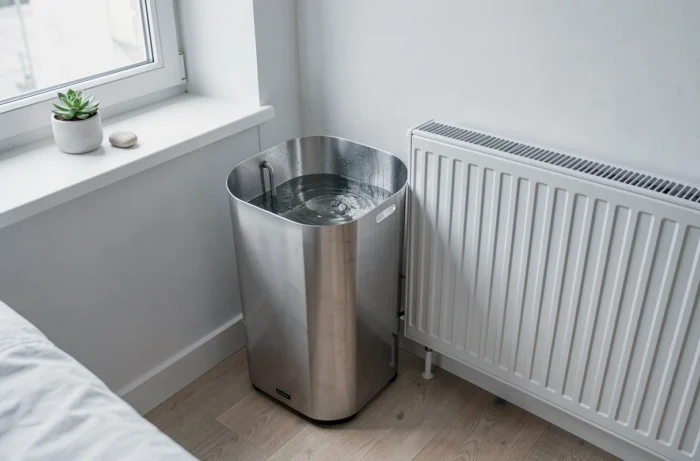
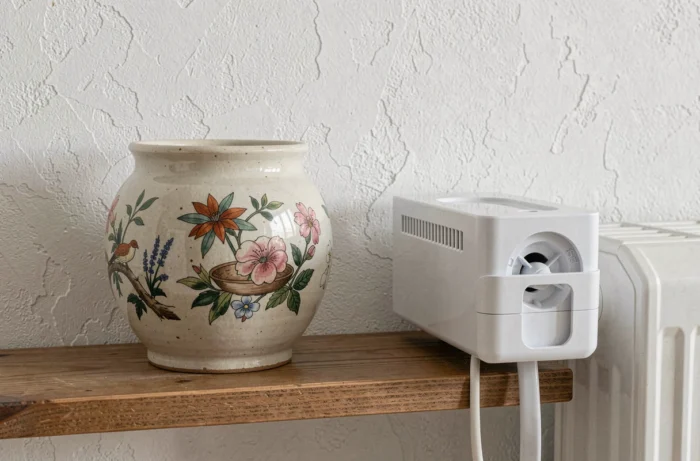
An electric humidifier (ultrasonic, cool-mist or evaporative) operates independently when plugged into a power outlet. Models with a built-in humidistat measure the room’s humidity and adjust their output accordingly.
This ability to regulate humidity makes all the difference in a home where heating dries the air to varying degrees from room to room. The device can maintain the recommended relative humidity range of 40 to 60%, a guideline provided by ADEME for indoor comfort.
Technologies and their impact on everyday use
Ultrasonic humidifiers produce a fine, quiet mist, making them suitable for bedrooms. Evaporative models use a damp filter and a fan, which helps prevent white dust from settling on furniture. The right technology depends on how much noise you can tolerate and how hard your local water is.
An electric humidifier can easily cover a standard-sized room, and the most powerful models can handle several dozen square metres. A ceramic radiator humidifier does not offer the same reach.
Maintaining a radiator humidifier and an electric humidifier: what it really involves
The cleaning routine is often underestimated. A reservoir of standing water, whether in a radiator humidifier or an electric humidifier, can become a breeding ground for bacteria and mould.
- Rinse and descale the ceramic radiator humidifier about every two weeks. Empty any remaining water rather than letting it sit between heating periods.
- An electric humidifier needs more frequent maintenance: empty and dry the reservoir every day, and clean the device every three days, in line with EPA recommendations for portable humidifiers.
- Filters in evaporative models should be replaced as often as the manufacturer recommends to avoid circulating poor-quality air.
A radiator humidifier is therefore easier to maintain, but that does not mean it can be neglected. Water left standing for several days in a ceramic container on a lukewarm radiator can develop a biofilm.
How to choose based on your home
Rather than comparing the two solutions in the abstract, save time by starting with the actual layout and conditions in your home.
- Room under 12 m² with a hot-water radiator that runs constantly: a ceramic radiator humidifier may be enough as a supplementary measure, provided you refill it daily.
- Open-plan living area, home with mechanical ventilation, or electric heating (radiators without a hot-water element): an electric humidifier with a humidistat is the only option that will produce a measurable effect.
- Nursery or room where a stable humidity level is important: a regulated humidifier lets you target a specific range, which a radiator humidifier cannot do.
- Minimal budget and a need for complete silence: a radiator humidifier uses no electricity and makes no noise—both valid advantages if your performance expectations are modest.
One thing to check before buying anything: the actual humidity level in the room. A hygrometer costing just a few euros is all you need. If humidity stays above 40%, adding a humidifier may be unnecessary and could even encourage condensation on the windows.
A radiator humidifier is a passive supplement; an electric humidifier actively regulates humidity. They do not meet the same needs. Comparing the two is like comparing a candle with a desk lamp: one creates ambience, the other lights up a work surface. Measure first, then choose.