A rainy Saturday, two hours to spare, and no desire to turn a screen back on. It’s often in these in-between moments that the question of what to do with your free time really comes up. Finding an activity that sticks takes less inspiration than a little planning: start with what you have on hand, how much time you have, and where you are.
Leisure activities that require no equipment or sign-up
We often assume that taking up a new hobby means buying something or signing up for a subscription. In practice, the activities that last are the ones you can start with no logistical hurdles. Brisk walking remains the most popular leisure activity outside of clubs, according to the INJEP and Crédoc’s 2025 National Sports Participation Barometer, which confirms the rise of independent activities compared with organized ones.
In practical terms, a 45-minute outing in a park or along a local path is a great alternative to an hour of scrolling. You can add a simple goal: photograph five different plants, record a voice memo, or scout a route for your next run.
Reading works the same way. A public library gives you access to thousands of titles for free, and most now offer an online catalog. For anyone looking for a range of ideas, MaxiScoop’s leisure section brings together suggestions organized by theme and situation.
Free writing (journaling, short stories, retrospective travel journals) requires nothing more than a notebook. It’s easy to underestimate how satisfying it can be to create something tangible in thirty minutes, with no judgment and no audience.
Creative hobbies and online classes for learning at home
When you want to try something beyond walking or reading, budget is often a concern. Online classes have changed the game. Free platforms let you learn drawing, cooking, video editing, or an instrument without leaving your table.
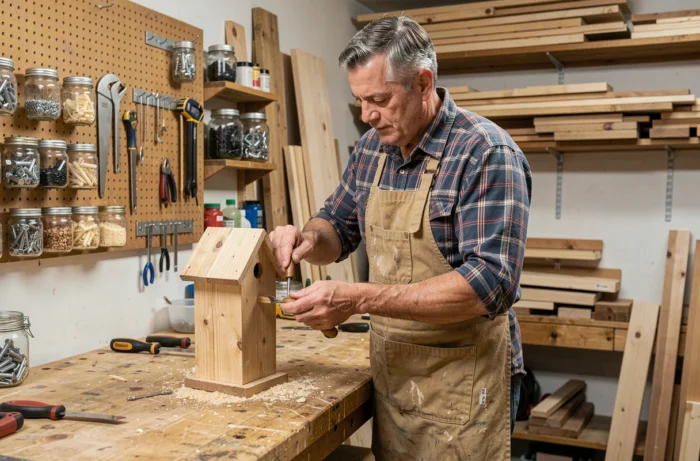
Starting with a specific project works better than following a theoretical program. Instead of signing up for a full pastry course, choose one recipe, master it, then move on to the next. The same approach works for sewing, watercolor painting, or pottery with a starter kit costing less than twenty euros.
Shared creative hobbies are also gaining popularity. Organizing a cooking workshop with neighbors or a drawing group at a café takes no more than a group message and a place to meet. The benefits go beyond simple entertainment: you create a regular get-together that gives your week some structure.
Three criteria for choosing the right online class
- Module length: 15- to 20-minute sessions fit more easily into a schedule than an hour-long class that you’ve abandoned by the third episode.
- A final project: a visible result (a dish, a drawing, a piece of music) does far more to keep you motivated than a series of abstract lessons.
- Access without a subscription: several platforms offer free content or pay-per-course options, so you don’t end up paying for content you won’t use.
Ideas for cultural outings based on where you live
Cultural offerings remain heavily concentrated in major cities. Shows, temporary exhibitions, festivals: in rural and suburban areas, the options are much more limited. Choosing activities that reflect your local area helps avoid the frustration of lists aimed only at people living in Paris or Lyon.
Outside major cities, media libraries regularly host film screenings, author events, and workshops. Local tourist offices publish calendars of often-overlooked events, including night markets, farm visits, and guided themed hikes organized by local groups.
For young people, the Culture Pass provides credit that can be used at bookstores, concert venues, or on digital platforms. The decree of February 27, 2025, revised the amounts and eligibility requirements effective March 1, 2025, so it’s worth checking the current rates before planning an outing.
Outdoor sports and games: make the most of nearby facilities
Multi-sport courts are becoming more common in mid-sized towns. These open-access courts, often free to use, make it possible to play basketball, soccer, or badminton without paying membership fees.
Outdoor games (pétanque, mölkky, kubb) require very little investment and work just as well for two people as for ten. Take them out of a bag, mark out a playing area on the ground, and play for as long as you like.
Screen-free ways to spend your free time: practical ideas for every time slot
The real challenge isn’t finding a list of activities. It’s matching a hobby to the time you actually have. Thirty minutes before dinner and a whole Sunday call for different choices.
- Less than thirty minutes: stretching, a quick sketch, listening to a podcast (news, history, fiction), or sorting a drawer or photo folder.
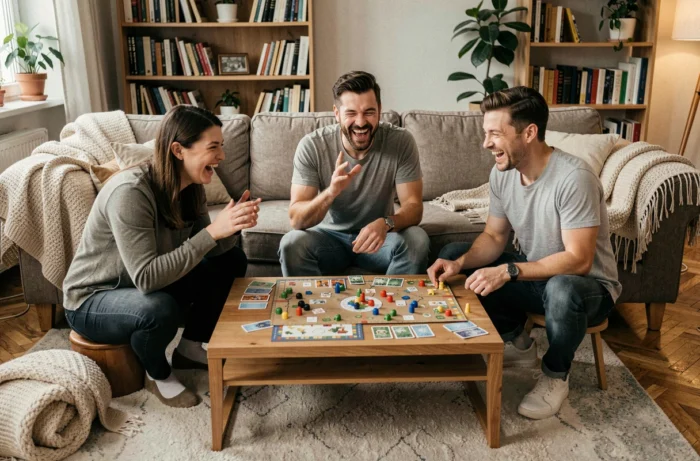
- One to two hours: a walk with a goal (taking photos, scouting a running route), a cooking session focused on one recipe, or a board game for two.
- Half a day or more: visit a natural or historic site less than an hour’s drive away, go for a hike with a picnic, or spend a day volunteering with a local organization.
Setting a specific time limit for each activity helps you avoid the “I don’t have time” reflex. There’s almost always thirty minutes to spare. The question is what to do with them before they disappear into a social media feed.
The most rewarding leisure activities over time have one thing in common: they produce something, whether it’s a memory, an object, a skill, or simply a pleasant sense of physical tiredness. Choosing an activity based on the result you’re hoping for, rather than on what’s trending, is the most reliable way to avoid giving up after two weeks.