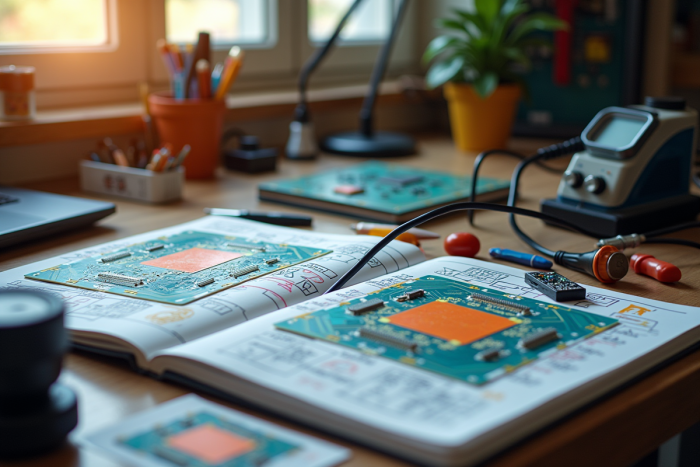
A toaster that reads the sky or a lamp that dances to the rhythm of a pulse: this is the kind of madness that some DIY enthusiasts allow themselves, armed with tiny electronic boards. Behind these printed circuits lies a desire for autonomy, far removed from the standardized machines served from a catalog. With every soldering point, DIY electronics transforms the living room into a factory of unexpected ideas. These tiny rectangles, seemingly innocuous, become the fuel for experiments that are sometimes playful, sometimes downright ingenious. It’s hard to imagine, looking at this piece of silicon, that it could give rise to such varied scenarios: a domestic robot, a connected greenhouse for temperamental basil, or other inventions emerging from a playful mind.
Why electronic boards have become the favorite playground for creatives
The DIY electronics community is growing rapidly, driven by a desire for technical freedom and limitless exploration. Electronic boards, the vibrant heart of this movement, open the door to the creation of interactive devices that sometimes existed only in the dreams of inventors. High school students, engineers, designers, self-taught individuals: everyone finds material to repurpose, recombine, and question. Open source platforms like Arduino break down barriers: here, there’s no need for a lab access badge; tinkering is welcome everywhere. These boards expand the playground infinitely. One module, and suddenly you can control a motor, capture data, automate a routine. The Gertduino, highlighted in the article ‘Gertduino: the possible projects with this board for makers – Tech Mafia’, crystallizes this momentum: it combines ease of programming with hardware versatility, boosting electronic creativity like never before.
- Interactive marble maze: joystick, servomotors, and Arduino come together to create a three-dimensional game, straight out of the imagination.
- Useless machine: or how to repurpose electronics to design an object as absurd as it is hypnotic.
- Connected weather station: temperature, humidity, light sensors, and an OLED screen coordinate under the guidance of an open-source board.
MONELECTROBOX offers educational kits that make these experiences accessible from adolescence, nurturing concrete STEM skills. With DIY electronics, everyone takes control of technology, invents their own uses, and forges a culture of making, deeply rooted in the digital present.
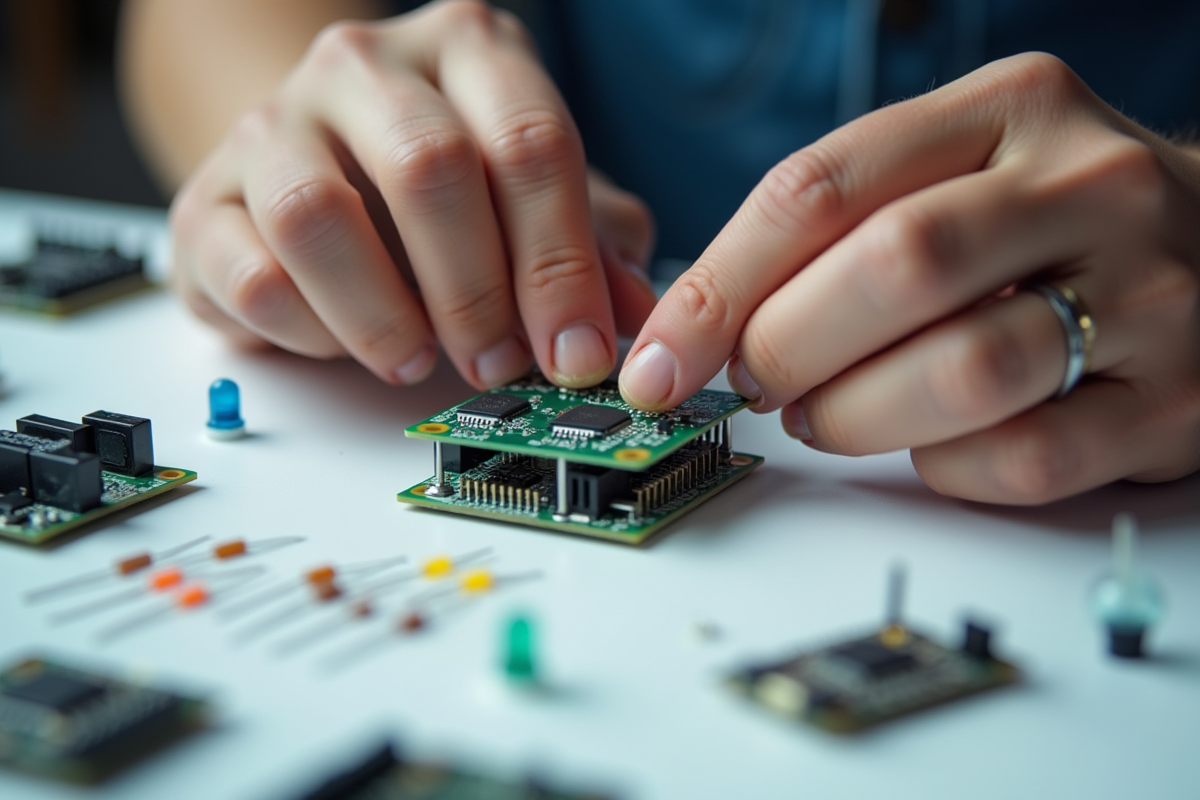
Must-try DIY projects: original ideas to unleash your creativity with electronics
The DIY electronics scene is brimming with creative projects that invite exploration, repurposing, and assembly according to one’s mood. An interactive marble maze, for example, combines a joystick, servomotors, and an Arduino board to animate a wooden platform. This challenge, straddling play and engineering, pushes participants to solve concrete problems and encourages collaboration around the table.
Another cult object: the Useless Machine. Behind this name lies a poetic mechanism: each press of a switch triggers a motorized arm that turns off the machine. A nod to absurdity, where technical reflection brushes against deadpan humor.
For the more pragmatic, the connected weather station combines temperature, humidity, light sensors, and an OLED screen. Children, thanks to kits designed for them, discover how to collect and interpret data: technology makes its way into the home, and everyone gets involved.
- The mind map: a visual tool for organizing ideas, anchoring memory, and structuring information. Canva, XMind, or Framindmap turn planning into a collective game.
- The creative card: cut, fold, stitch. Thick paper, stamps, thread, and needles combine to create unique greetings and invitations.
- The mantra card: an inspirational medium for sketching goals, awakening creativity, or planting intentions in a personal notebook.
Embroidery on cards, straddling craftsmanship and technology, intertwines paper, fabric, and thread for unique creations. Each project becomes a field of experimentation and transmission, where electronics adds its touch to personal expression. Ultimately, these tiny boards shake up habits: they give everyone the power to invent, learn, and transform the everyday into a field of exploration. Who knows what your next idea could create?