
We place an order on Amazon, click on “buy,” and the payment is validated without any SMS code or bank notification appearing. For those who are used to validating each online purchase via a pop-up from their bank, this situation seems abnormal. The mechanism behind this apparent absence of 3D Secure relies on a set of regulatory exemptions and technical choices that Amazon masters better than most e-commerce merchants.
SCA Exemptions and DSP2 Directive: What Happens Behind the Scenes During an Amazon Payment
When we talk about 3D Secure, we are actually referring to a protocol triggered by the card-issuing bank, not by the merchant. The European DSP2 directive imposes a strong customer authentication (SCA) for online payments, but it also provides for a series of exemptions. This is where everything plays out.
Amazon relies on these exemptions to avoid triggering the 3D Secure challenge for every transaction. The most commonly used is “transaction risk analysis” (TRA): if the merchant demonstrates a sufficiently low fraud rate, the bank can authorize the payment without visible authentication. With considerable transaction volumes and advanced behavioral analysis tools, Amazon easily meets the criteria to request these exemptions.
To delve deeper into 3D Secure double authentication on Amazon, it is essential to understand that the final decision rests with the issuing bank. Amazon sends a request for exemption, but it is the banking institution that accepts or declines it. When the bank considers the risk to be low, it validates without triggering additional verification.
Other common exemptions include low amounts and recurring payments. A monthly renewed Amazon Prime subscription or a small purchase will almost never trigger 3D Secure because the regulation itself provides for these cases.
Amazon Behavioral Analysis: Why Security Doesn’t Involve an SMS Code
Online payment security is often reduced to the code received via SMS. This is a misperception. Amazon has built a fraud detection system that operates even before the transaction is submitted to the bank.
Specifically, Amazon analyzes dozens of signals with each purchase: the device used, the IP address, order history, delivery address, browsing behavior, click speed. If all these signals match the buyer’s usual profile, the risk is deemed minimal and no additional verification is requested.
This scoring system effectively replaces the role of 3D Secure for the majority of transactions. 3D Secure is triggered only when an alert signal appears: new card, unusual delivery address, high amount on a recent account, connection from an unknown device.
For the user, it gives the impression that Amazon is “bypassing” security. The reality is the opposite: verification occurs, but it is invisible. This model is also cited in conferences between regulators and banks as a use case for the TRA exemptions provided by the DSP2.
Concrete Consequences for the Buyer in Case of Fraud on Amazon
When a merchant uses an SCA exemption and fraud occurs, the financial responsibility falls on the merchant, not the customer. This is a point that many are unaware of. Amazon assumes this risk because its fraud rate remains low enough for the overall cost to be less than that of cart abandonment caused by 3D Secure.
Because 3D Secure has a real commercial cost. At each added authentication step, a number of buyers abandon their carts: issues receiving the SMS, banking app not responding, timeout. Large e-commerce merchants precisely measure this abandonment rate and balance friction against security.
What to Do If You Notice a Suspicious Charge
- Check the order history in your Amazon account, including archived orders and registered secondary payment methods
- Contact Amazon customer service to report the transaction, as the merchant is responsible in case of an accepted SCA exemption
- Notify your bank to block the account if unauthorized access is suspected, and request a refund through the chargeback procedure
A Reddit user’s testimony illustrates the trap well: a forgotten secondary payment method, never deleted, that allows a purchase to be validated without any intervention. Removing unused cards from your Amazon account remains the most effective reflex.
Tokenization and Registered Card: The Role of the Bank in Payment Without 3D Secure
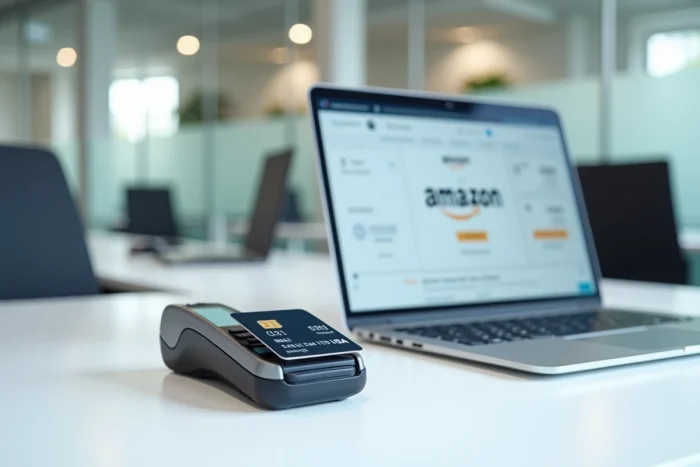
Another technical mechanism explains the absence of visible 3D Secure: tokenization. When a credit card is registered on Amazon, the actual number is not stored. Amazon keeps a token provided by the card network or the issuing bank.
This token is linked to the device, the account, and the merchant. The issuing bank recognizes this triplet as reliable and processes tokenized payments as low-risk transactions. The result: no 3D Secure challenge triggered.
Responses on this point vary among banks. Some still trigger a verification when initially adding the card or after a device change. Others apply tokenization transparently from the first purchase. The exact behavior depends on the issuer’s policy, not Amazon’s.
Verification When Registering a New Card
Amazon may request a micro-debit or a verification code when adding a card. This unique step serves as initial SCA. Once validated, subsequent purchases proceed without visible authentication as long as the risk profile remains stable.
The absence of 3D Secure on Amazon is therefore not a gap in security. It is the result of a combination of DSP2 regulatory exemptions, real-time behavioral analysis, and banking tokenization. The system works because Amazon bears the financial responsibility for unauthorized fraud, a risk that few smaller merchants can afford to take on.