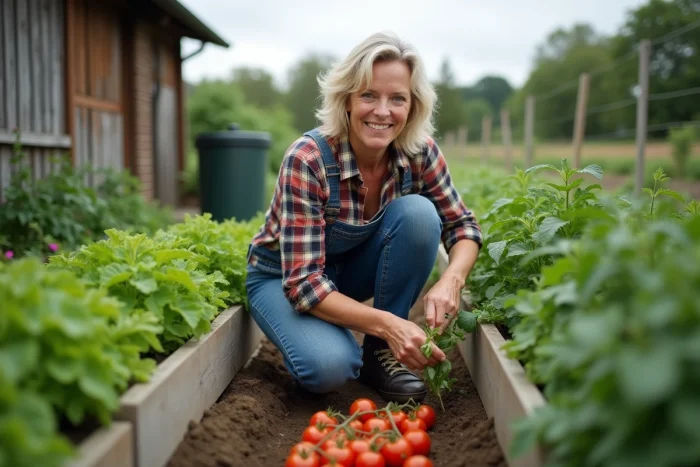
In France, the majority of households remain connected to the centralized electrical grid despite the constant growth of individual photovoltaic installations. Local regulations may prohibit rainwater harvesting in certain urban areas, although this practice is widely valued in other regions. Many home gardens only cover a fraction of a household’s annual food needs, while a few family farms manage to exceed the threshold of self-sufficiency through intensive and precise methods.
Some steps towards energy or food independence require significant initial investments, but accessible solutions exist for every scale of project. The experiences and resources available help identify concrete levers to progress towards greater autonomy.
Why choose autonomy today?
Autonomy is emerging as a direct response to contemporary challenges. In the face of market uncertainty, resource scarcity, or energy price volatility, more and more citizens are seeking to live autonomously and take control of their lifestyle. This quest is not limited to food or electricity: it encompasses food self-sufficiency, energy self-sufficiency, but also water self-sufficiency and sometimes even financial self-sufficiency.
In France, self-sufficient communities are emerging in rural areas, inspired by innovative models observed in Costa Rica or the Netherlands. Family farms focus on local consumption, knowledge exchange, and resource pooling, while individual initiatives are rooted in urban peripheries. The aspiration for independence attracts a diverse range of profiles, from young households to retirees, all driven by the desire to regain control over their daily lives.
This approach is a political and ecological choice, but also a search for resilience. Meeting one’s own needs reduces dependence on large infrastructures and promotes a frugal management of resources. The advice from the Blog Autonome helps identify concrete strategies to initiate this shift, whether it involves installing solar panels, rethinking one’s garden, or adapting family organization. Committing to the path of self-sufficiency is to assert a form of freedom and collective responsibility in the face of the complexities of the contemporary world.
What concrete solutions are there to produce energy and cultivate a garden?
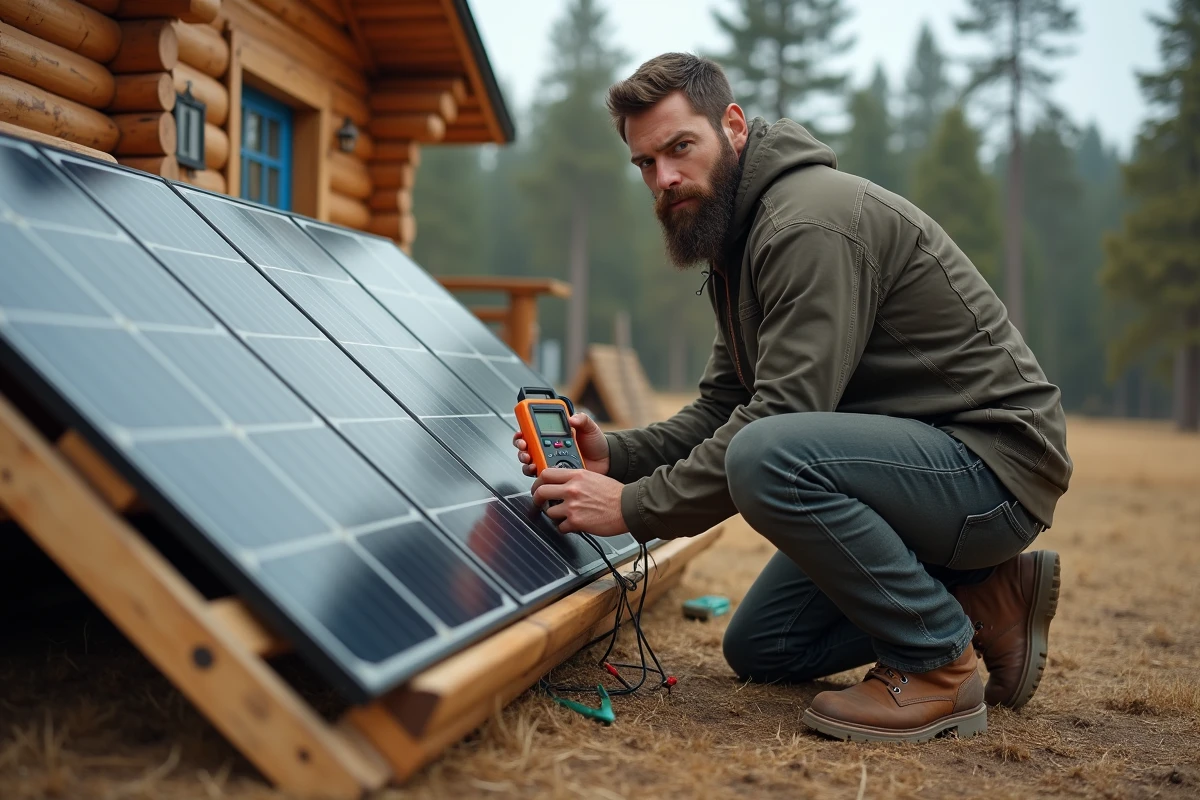
To move towards energy autonomy, several reliable technical options are available to everyone. Solar panels remain at the top of the list for ensuring the electricity of an autonomous home or a tiny house. Whether installed on the roof or on the ground, these systems allow for the production of clean energy while limiting dependence on the traditional grid. Thermal solar panels also provide a relevant solution for heating water: simplicity, efficiency, and sobriety combined. By combining solar energy, wood for heating, or even a small wind turbine or biomass, it becomes possible to cover the vast majority of a household’s needs.
For water, rainwater harvesting offers an effective alternative, both for irrigation and washing, and even, once properly filtered, for domestic use. Suitable installations, such as tanks and filtration systems, can find their place in both a farm and a small urban garden. This choice aligns with the desire to limit the use of potable water from the grid and to manage the resource within an autonomous framework.
Permaculture is essential in the garden to build a self-sufficient vegetable garden. Proven techniques such as mulching, composting, crop rotation, and the selection of suitable varieties and perennial plants allow for the creation of an autonomous garden where maintenance decreases, fertility establishes, and diversity increases. To limit evaporation, ground cover plants are valuable; to enrich biodiversity, integrating animals like chickens, goats, or bees proves very effective. Even in the city, this dynamic is taking shape: shared gardens, balconies transformed into micro-gardens, all contribute to the collective resilience of neighborhoods.
In this vein, the self-sufficient greenhouse combines food production, solar energy, and water collection under one roof. It demonstrates that every context can find its tailored solutions.
Practical advice and resources to start towards independence
Before diving in, it is important to adopt a more sober and thoughtful lifestyle. One must learn to differentiate between what is truly needed and what falls under unnecessary comfort. Initiating recycling can be invaluable: recovered materials, repaired tools, or transformed furniture give rise to new uses. Bartering, now well established in many French self-sufficient communities, weaves local ties and values the exchange of skills.
Some concrete actions can take you further. Here are a few avenues to explore:
- Install dry toilets to significantly reduce potable water consumption and transform organic waste into a resource for the soil
- Start a vegetable patch and experiment with permaculture, crop rotation, and mulching to promote food autonomy
Training remains a decisive step. Self-sufficiency training, as well as books on self-sufficiency, provide solid reference points: energy management, garden organization, collective functioning. Some reference works detail every aspect, from seed selection to water recovery. Relying on reliable resources lays a good foundation.
To structure a project for independence, support from local networks and experience exchange platforms proves invaluable. Tool sharing, community gardens, collective projects: these initiatives prevent isolation and accelerate learning. Autonomy is not decreed; it is invented, step by step, taking into account everyone’s constraints and strengths.
Along the way, every advancement, no matter how small, expands the realm of possibilities. Between the food greenhouse and the solar cabin, staying in control of one’s resources is already charting a unique path towards freedom. The question is no longer whether autonomy is feasible, but when and how to make it one’s own.