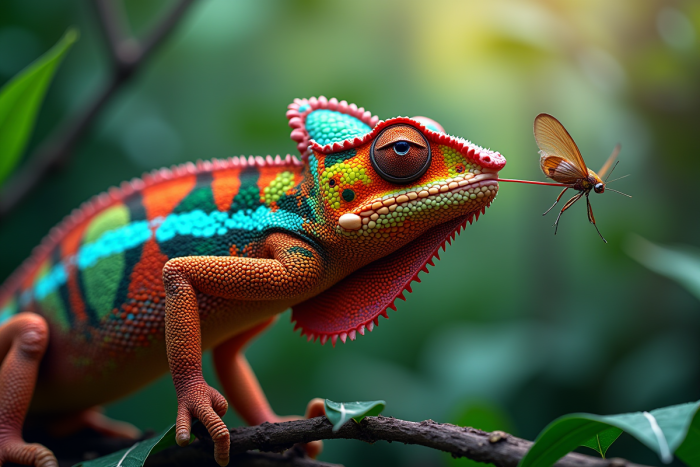
Animal behaviors and adaptations continue to fascinate scientists and nature enthusiasts. Sometimes, reality even surpasses the most extravagant scenarios. For example, some deep-sea fish possess bioluminescent organs to attract their prey in total darkness.
Another astonishing example involves leafcutter ants that cultivate mushrooms for food. These tiny insects have practiced a form of sophisticated agriculture for millions of years. Such animal curiosities demonstrate the diversity and ingenuity of life on Earth, reminding us that nature still has much to teach us.
Animals with Extraordinary Abilities
Nature is full of animals with amazing capabilities, often defying human imagination. Their adaptations and behaviors illustrate how ingenious living beings can be.
Bioengineering and Contemporary Art
Bioengineering has allowed artists like Marta de Menezes and Eduardo Kac to push the boundaries between art and science. Menezes modifies the symmetry of butterfly wings, creating unique living artworks. Kac, on the other hand, creates bioluminescent transgenic animals. These practices question our relationship with nature and technology, revealing a new dimension of animal ingenuity.
Laboratory Chimeras
The Art Orienté Objet collective showcases laboratory chimeras, highlighting the potential for genetic manipulation. Meanwhile, Brandon Ballengée specializes in recreating extinct species, opening a debate on ethics and the limits of science.
The Baboon’s Behind
Among the most striking curiosities, the baboon’s behind intrigues researchers. This anatomical feature is not only aesthetic but also plays a fundamental role in social communication and reproduction. To understand why baboons have such colorful behinds, one must delve into complex and fascinating scientific explanations.
Symbolism and Identity
Koen Vanmechelen uses chickens to symbolize human and national identity, crossing different breeds to create unique hybrids. This artistic approach highlights genetic and cultural diversity, reminding us that humans and animals share a rich and interconnected history.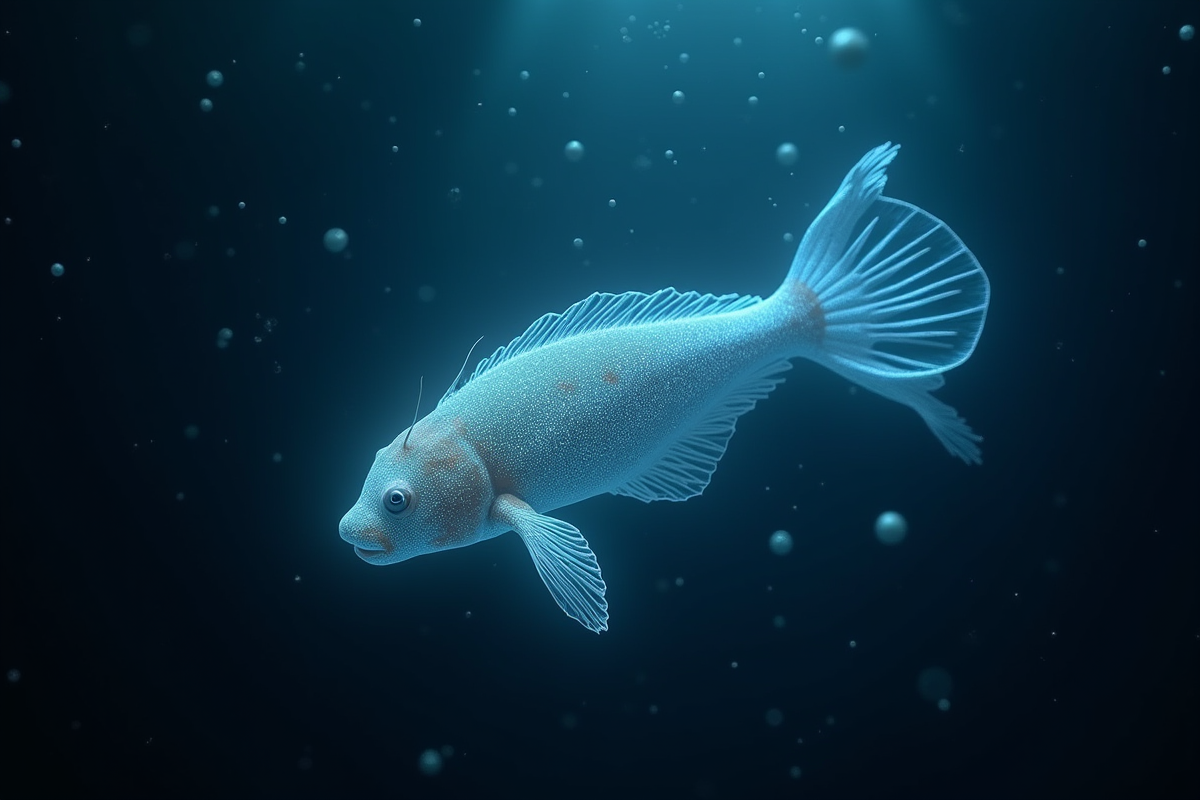
Surprising Adaptations of Wildlife
Animal adaptations are marvels of ingenuity that often surpass human imagination. These adaptation mechanisms allow species to survive in hostile environments or to take advantage of specific ecological niches.
The Superpowers of Animals
- Extreme Camouflage: The mimic octopus, also known as Thaumoctopus mimicus, can imitate the shape and behavior of several other marine animals, such as the lionfish or the ray, to deceive its predators.
- Regeneration: The axolotl, a Mexican salamander, has the ability to regenerate entire parts of its body, including limbs, the heart, and even segments of the spinal cord.
- Super Vision: Some mantis shrimp possess trinocular vision, allowing them to detect light spectra invisible to the human eye.
Life in Extreme Conditions
Tardigrades, also known as water bears, are microorganisms capable of surviving in extreme conditions: temperatures from -200°C to 150°C, pressures six times greater than those found in the deepest ocean floors, and even in space.
Robert Smithson’s Critique of Nature
Robert Smithson, artist and theorist, critiques the idea of nature as a fiction of the 18th and 19th centuries. According to him, nature is not a static entity but rather a concept in constant redefinition, influenced by scientific advancements and cultural visions. This perspective invites us to rethink our relationship with nature and to recognize the incredible adaptability of living beings as evidence of their dynamism and complexity.